By Rajinder Phull on August 18, 2026

The NHS does not have a shortage of innovation. It has a shortage of capacity to adopt it.
New medicines, artificial intelligence, digital systems, medical devices and redesigned models of care all offer opportunities to improve outcomes. The challenge is finding the capacity, capability and willingness to evaluate good ideas, adopt them and scale them.
Innovation is often treated as an addition to everyday NHS delivery: a pilot requiring extra funding, a transformation programme or a technology purchase competing with immediate operational pressures.
But what if part of the answer is not simply finding more money for innovation, but releasing more value from the resources we already have?
Medicines optimisation can play a much more strategic role in doing that.
Medicines optimisation creates more than savings
Medicines optimisation is still frequently associated with reducing prescribing costs.
Cost matters. The NHS spends tens of billions of pounds each year on medicines, appliances and medical devices. Reducing waste, improving prescribing and ensuring treatments are used safely and effectively are essential responsibilities.
However, medicines optimisation should never become a euphemism for selecting the cheapest product.
Having worked in medicines optimisation for longer than I may want to admit, I have met many excellent teams seeking genuine clinical and patient value. The challenge is that this work is often carried out tactically within individual teams rather than strategically across organisations and health systems.
At its best, medicines optimisation helps people receive the right treatment at the right time, understand how to use it and achieve the best possible outcome.
This creates several forms of value:
- Cash-releasing value – expenditure is genuinely reduced, with equivalent or better outcomes, and money becomes available for another purpose.
- Capacity-releasing value – avoidable workload is removed, allowing clinicians and services to use their time differently.
- Cost avoidance – an intervention reduces the likelihood of future appointments, complications, hospital admissions or other expenditure.
- Patient value – better outcomes, greater independence or improved quality of life, even where there is no immediate reduction in an NHS budget.
These forms of value are connected, but they are not interchangeable.
Preventing an admission, for example, may create significant value without reducing a budget. That bed will usually be used by another patient. The benefit is primarily capacity rather than cash.
Being precise about the value created helps avoid claims of theoretical savings that never translate into practical headroom.
Capturing and reinvesting value
Medicines optimisation teams are regularly expected to deliver efficiencies but are less often involved in deciding what those efficiencies make possible.
Savings targets are important, particularly in the current financial environment, but they should be part of a wider discussion about how value is used.
That is complicated because the organisation paying for an intervention is not always the organisation receiving the benefit.
A medication review delivered in primary care may prevent a hospital admission. Better adherence may reduce deterioration over several years. An intervention funded by one provider may release capacity elsewhere in the system.
Benefits are distributed across organisations, budgets and timescales. Medicines optimisation therefore needs to be considered as a system strategy, supported by a consistent approach to identifying, capturing and reinvesting value.
Importantly, reinvestment does not always mean there will be a neat line between one saving and one new investment.
A system may reduce prescribing of treatments that offer less clinical or cost-effective value while creating greater overall headroom to move faster on newer priorities. There may be no business case saying that saving £1 in one area directly funds £1 somewhere else, but the strategic relationship still matters.
From optimisation to reinvestment
A practical model could use three stages.
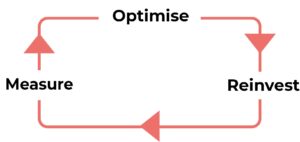
1. Optimise
Begin with a clearly defined clinical or operational opportunity and identify the type of value it is expected to create.
Will it release cash or clinical capacity? Avoid future costs? Improve patient outcomes? Where will the benefit appear and over what period?
Not every benefit can be converted into a budget reduction. Being honest about this makes the investment case more credible.
2. Reinvest
Agree how demonstrable value will be used.
Cash-releasing savings could support prevention, proactive care or technology. Released clinical capacity could be redirected towards people at higher risk. System partners could agree how benefits will be shared when investment and return occur in different organisations.
Without an explicit conversation about reinvestment, efficiencies will usually be absorbed by current operational pressures.
3. Measure
Evaluate whether the investment delivers better outcomes and creates further value.
Measurement should include clinical outcomes, safety, patient experience, inequalities and workforce impact alongside financial measures.
A Real World Example
There is already a good example of this thinking in North East and North Cumbria where the Medicines Optimisation Team has used funding from the prescribing budget to pump-prime innovative projects across general practice, PCNs and community pharmacy.
Funding is linked to the medicines strategy, prescribing efficiencies, demonstrable value for money, scalability and the ability for projects to become self-sustaining. Confidence in delivering a minimum 2:1 return on investment is one of the assessment criteria.
Projects have included inhaler optimisation, frailty and deprescribing, medicines waste and safety, and digital medicines review approaches.
Not every worthwhile innovation can or should be reduced to a single ROI figure. Other types of value matter too. It is however crucial to have a clear statement of requirements, alignment and ask from the outset what type of value an innovation is expected to create, how it will be measured and whether it can ultimately sustain itself. Innovations with positive outcomes from the programme will be scaled in subsequent years.
The result is a visible cycle: Optimise. Reinvest. Measure.
What this could look like in practice
Consider problematic polypharmacy.
A well-designed programme may reduce medicines-related harm, improve quality of life and prevent avoidable contacts with primary and secondary care. Some of the value created could then support more proactive medication reviews for people living with frailty or at greatest risk of an adverse medicines event.
Continuous glucose monitoring in diabetes provides another example.
It should be viewed as more than a technology purchase. Its value depends heavily on implementation. When combined with structured education, proactive medicines support and appropriate clinical intervention, it can help people understand their condition, make informed decisions and improve measurable outcomes.
Medicines optimisation teams are often well placed to connect these elements. They understand prescribing, clinical pathways, patient behaviour, implementation and the practical consequences of change.
Avoiding crude cost reduction
Using medicines optimisation to create investment must not lead to crude switching programmes, unrealistic savings assumptions or decisions based only on acquisition cost.
The cheapest option may not offer the best overall value. Poorly designed changes can increase workload, undermine patient confidence and create unintended clinical consequences.
Medicines optimisation teams are expert clinical teams with the potential to influence strategy across organisations. Their contribution should be assessed through patient outcomes, safety, workforce capacity and responsible adoption of innovation, as well as expenditure.
The aim is to obtain greater health value from every pound invested.
A leadership challenge for NHS systems
There is a simple test of whether an organisation is treating medicines optimisation strategically.
Every commissioning organisation and provider should be able to answer five questions:
- What value are our medicines optimisation programmes creating?
- How much of that value is cash-releasing, capacity-releasing, preventative or outcome-based?
- Where does each benefit appear, and who is responsible for capturing it?
- What proportion will be deliberately reinvested in prevention, proactive care and innovation?
- How will we demonstrate what became possible as a result?
Without clear answers, medicines optimisation risks remaining focused on annual Cost Improvement Programme targets and short-term savings exercises.
With a deliberate approach to optimisation, reinvestment and measurement, medicines optimisation teams can become part of the infrastructure through which the NHS enables change.
Funding the future
When efficiencies are absorbed entirely by today’s pressures, it becomes harder to build the services needed for tomorrow.
Medicines optimisation can help systems identify value, understand who benefits, agree where reinvestment should take place and measure the resulting outcomes.
That makes it an enabler of prevention, neighbourhood health, proactive care and responsible technology adoption.
The key test for NHS leaders is not simply how much value their medicines optimisation programmes identify.
It is whether they can capture that value, reinvest it intelligently and demonstrate what became possible as a result.